
The Best EMR for Functional and Integrative Medicine
For most functional and integrative medicine practices, Cerbo is the best fit when you want an EHR built around cash-based, functional care, and OptiMantra is the strongest value if you want booking, charting, memberships and packages in one system at a lower monthly price. Healthie suits practices that run structured programs and courses, and Charm is the cheapest way to start, with a free plan and claims tools if you bill some insurance.
Every price below is the vendor's published price, checked on their own site in November 2026. Functional medicine practices tend to need several add-ons, so the base price is rarely the full bill.
Why functional medicine strains a standard EMR
A conventional primary care EMR is designed for short visits, a problem list and a claim at the end. A functional or integrative practice works differently, and the gaps show up at every step of a patient's first few months with you.
Picture a typical new patient. Before the first visit they fill out a long intake covering history, diet, sleep, stress and every supplement they take. The first visit runs 60 to 90 minutes. You order a broad lab panel, sometimes from a specialty lab, and the results arrive weeks later as long PDFs. You build a protocol with diet changes, supplements and follow-up labs, sell them a three or six month package, and see them again in four weeks to adjust.
Each of those steps puts pressure on a different part of the software, and a chart that was built for 15 minute visits will make your team work around it.
What to look for, step by step
| Step in the patient's journey | What the EMR needs to do | What to ask on the demo |
|---|---|---|
| Intake | Long custom forms that land in the chart | Do answers fill chart fields or just attach a PDF? |
| First visit | Long visit types and flexible note templates | Can I build my own 90 minute template? |
| Labs | Ordering, results and trending over time | Which labs are bi-directional for me? |
| Protocol | Reusable plans with supplements and instructions | Can I save a protocol and apply it in one step? |
| Supplements | Recommending, selling or dispensing | What connects, and what is entered by hand? |
| Packages | Selling a bundle of visits and services | Does the package track what's used and left? |
| Follow-up | Messages, reminders and recurring billing | How do members reach me between visits? |
Labs deserve extra attention
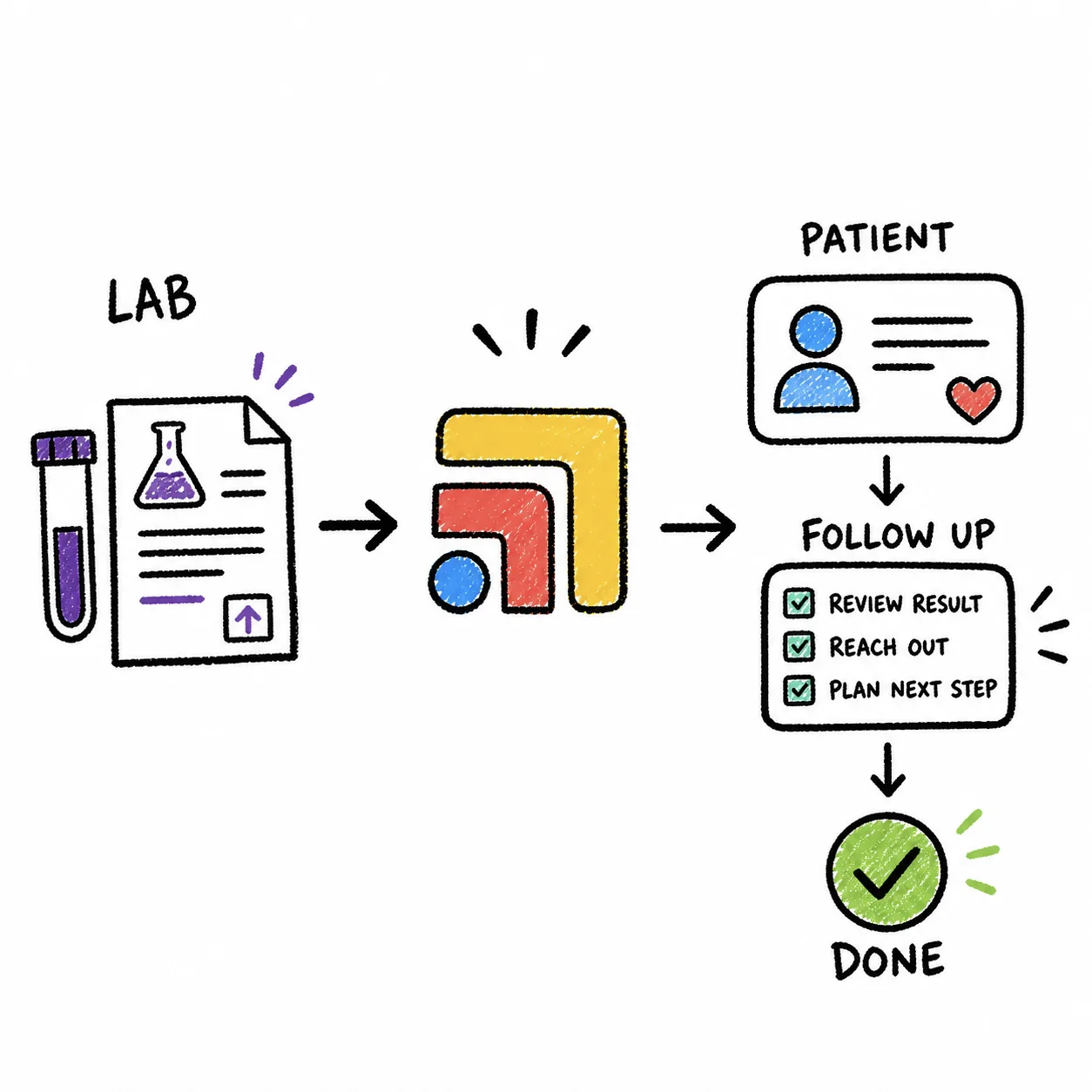
Labs are where functional medicine practices spend the most staff time. Results from a national lab may arrive as structured data, while specialty panels often come as a PDF that someone has to read, file and follow up on. Cerbo describes bi-directional lab integrations that let you submit orders electronically, and Atlas.md lists lab integrations from Quest and LabCorp to smaller regional labs. Ask every vendor to show you a real result from the lab you use most, including how you trend a value over several draws.
Supplements and dispensing
None of the vendors here publish a list of supplement dispensary connections in the facts we checked, so treat this as a demo question for each one. What we can confirm is that Charm lists an e-commerce add-on priced at 1% of order value with a $20 monthly minimum, and that Atlas.md (unlimited inventory and dispensing) and Hint (medication inventory and dispensing, with its EMR) both support in-house dispensing. Dispensing rules vary by state, so confirm what your license allows with a healthcare attorney or your state board before you stock anything.
Bring one real protocol to every demo, with the supplements, doses, labs and follow-up timing written out. Ask the vendor to build it live and then apply it to a test patient. You'll learn more in ten minutes than from the whole slide deck.
The EMRs worth shortlisting
| EMR | Best for | Published starting price | Key add-ons |
|---|---|---|---|
| Cerbo | Cash-based functional and integrative practices | $281/mo per full-time prescriber | $1,195 setup, portal $79/mo |
| OptiMantra | All-in-one with packages, IVs and aesthetics | $99/mo first practitioner | eRx with EPCS $38/mo, texting $75/mo |
| Healthie | Programs, courses and care plans | $45/mo billed annually (Essentials) | $50/mo per added clinician |
| Charm | Lowest cost to start, some insurance | Free plan, 1 provider | eRx $15/mo, telehealth $20/mo |
| PracticeQ | Intake, notes, booking and payments | $84.90/mo (Practice Management) | $30/mo per added practitioner |
Cerbo
Cerbo is the pick when you want an EHR set up around a cash-based, functional or integrative practice from day one. Its pricing is built for mixed teams, which matters in integrative care. A full-time prescribing provider (MD, DO, NP, ND) is $281 a month, a non-prescribing provider is $256, a supporting provider such as an acupuncturist, dietitian or chiropractor is $127, and non-provider staff are $63. Part-time rates exist for multi-provider practices. The costs to plan for are the $1,195 one-time setup fee (or $595 under its new-practice special for part-time solo practices with fewer than 30 patients and under six months in business), the $79 a month patient portal, $27 a month for telemedicine, and an ambient scribe at $29 a month per provider for up to 60 notes. Memberships and automated subscriptions run through an integrated merchant partner, so ask for that processor's rates on the demo.
OptiMantra
OptiMantra is the strongest value for an integrative or wellness practice that wants booking, charting and checkout in one system. The first practitioner is $99 a month, each additional practitioner is $49, clinical staff are $25 and clerical staff are free. It lists membership and package management, superbills, and support for IVs and aesthetics, which fits practices that sell bundles. Add-ons you'll likely need are ePrescribing with EPCS at $38 a month, two-way texting at $75 a month and a fax number from $25 a month. There's no contract, with 30 days' notice to cancel.
Healthie
Healthie suits practices that run structured programs, such as a 12 week metabolic reset or a group gut-health course, alongside one-on-one care. Its annual plans start at $18 a month (Core, 10 active clients), then $45 (Essentials, 250 active clients) and $115 (Plus, unlimited clients). Group is from $135 a month for multi-practitioner practices, and added clinicians are $50 a month each.
Charm
Charm is the budget-first choice and a reasonable one if you still bill some insurance. The free plan covers one provider, five users, up to 1,000 patients and 50 encounters a month. Beyond that, you can pay $0.50 per encounter (with a $25 monthly minimum) or $200 per provider per month. ePrescribing is $15 per provider, telehealth $20, and electronic claims run through an Optum add-on.
PracticeQ
PracticeQ is lighter than the others. Its Practice Management plan ($84.90 a month, plus $30 per additional practitioner) lists custom intake forms, treatment notes, a booking widget, a client portal and payments. We didn't see ePrescribing or lab ordering on its published plans, so it works best for health coaching or practices whose prescribing happens elsewhere. Confirm on the demo.
Honest gaps to plan around
No EMR on this list does everything a functional medicine practice wants out of the box. Here's where you'll probably still need a second tool or a workaround.
- Specialty lab PDFs. Even with good lab integrations, results from smaller specialty labs often arrive as documents someone has to file and act on.
- Supplement ordering. Unless the vendor shows you a working connection to your dispensary, plan on recommending supplements in one place and documenting them in another.
- Package and membership billing details. Cerbo uses an integrated merchant partner, so processing rates aren't on its pricing page. For a deeper look at card and ACH fees, see patient payments and billing software.
- Patient messaging. Several plans charge separately for texting or the portal, so a long-visit practice that promises access between visits should price that in.
None of this means you picked the wrong system. These tools were built separately, and functional medicine sits right where they meet.

Picking for your kind of practice
A solo MD or DO opening a cash-pay functional practice will usually compare Cerbo and OptiMantra first, with Cerbo winning on depth and OptiMantra on price. A practice with an acupuncturist, dietitian or health coach on staff should run the per-role math on Cerbo, since supporting providers cost less than prescribers there. A program-led practice will feel at home in Healthie. And a doctor testing the waters part-time can start on Charm's free plan and move up later.
If you're also weighing general-purpose EMRs, our guide to the best EMR for a private practice covers the wider field, and what medical practice software costs shows how the add-ons stack up over a year.
The part most guides skip
Every tool in a DPC clinic is good at its own job, and none of them were built to talk to each other. A patient text turns into a refill in the chart, which needs a review, which needs a reply, and the follow-up lives in someone's head. That isn't anyone's fault. The tools just don't share a to-do list.
That's the job Tabflows does. Tabflows is a dedicated tech team for DPC clinics. We connect the tools you already chose and give your team one place for chat, tasks and patient context, with managed workflows for the repeat work like refills, lab follow-ups and onboarding. You keep every tool you picked.
Frequently asked questions
What is the best EMR for functional medicine?
Cerbo is the most common pick for a cash-based functional or integrative practice that wants one EHR set up around it, starting at $281 a month for a full-time prescribing provider. OptiMantra is the lower-cost all-in-one at $99 a month for the first practitioner, and Healthie fits practices built around programs and courses.
How much does a functional medicine EMR cost?
Published prices in November 2026 ranged from Charm's free plan (one provider, 50 encounters a month) and Healthie at $18 a month billed annually, up to Cerbo at $281 a month per full-time prescribing provider plus a $1,195 one-time setup fee. Add-ons like ePrescribing, a patient portal and texting can change the total a lot.
Can a functional medicine EMR handle supplements?
Some handle part of it. Charm lists an e-commerce add-on at 1% of order value, and Atlas.md and Hint include medication inventory and dispensing. For an outside supplement dispensary, ask each vendor on the demo exactly what connects and what you would still enter by hand.
Do functional medicine practices need insurance billing in their EMR?
Most are cash-pay, but many give patients a superbill to submit for reimbursement and some bill a few plans. OptiMantra lists superbills and insurance billing at $0.25 a claim, and Charm offers electronic claims through an Optum add-on.