
The Best EMR for a Solo Practice
For a solo doctor, the best EMR is the one that does the most of your non-clinical work for the least money and setup time, because you're the one doing all of it. On a tight budget, Charm (free plan for one provider) and OptiMantra ($99 a month for the first practitioner) cover charting, prescribing and billing. If you run a membership practice, Atlas.md and Hint keep billing and the chart together for about $300 a month, and Elation is worth the higher price if the chart itself is what you care about most.
This guide works out what each one actually costs for exactly one provider, what you can safely leave out when you're the only clinician, and when it's time to rethink the choice. Prices are each vendor's published price, checked on their own site in November 2026.
One doctor, every hat
In a solo practice, the person who charts the visit also answers the portal message at 9 p.m., chases the failed card, signs the lab results and figures out why the fax didn't go through. There's no billing department to absorb a clunky claims screen and no front desk to work around a calendar that doesn't sync. Every rough edge in the software lands on your evening.
That shifts the priorities. A solo doctor should weigh, in roughly this order:
- How fast you can finish a note. You'll write every one of them yourself.
- Whether billing runs itself. Recurring memberships that charge on schedule, or claims that go out without you babysitting them.
- How patients reach you. A portal or texting inbox you can check from your phone keeps messages from piling up.
- What it costs at one seat. Some pricing is designed for groups, and a single provider pays the full minimum.
What it really costs for one provider
Here's what a single prescribing provider pays per month on the plans that make sense for a solo practice, plus the add-ons you're most likely to need. These are published prices only. Anything we couldn't confirm is marked "ask."
| EMR and plan | Base per month | Common add-ons | Good to know |
|---|---|---|---|
| Charm, free plan | $0 | eRx $15/mo | 50 encounters a month |
| Charm, provider plan | $200 | eRx $15/mo | Unlimited patients |
| OptiMantra | $99 | eRx with EPCS $38/mo | No contract |
| Akute, Launch | $100 | EPCS $15/mo | First 50 patients |
| Akute, Essentials | $300 | EPCS $15/mo | 100 patients, then $0.75 each |
| Hint, Launch | $290 | Hint's assistant $100/mo | Unlimited members |
| Atlas.md | $300 | eRx $475 setup, $400/yr | Unlimited patients |
| Cerbo | $281 | Portal $79/mo | Setup $1,195 |
| Elation, Standard DPC | $375 | Telehealth $25/mo | Staff included |
| Hero EMR | Ask | Ask | One plan, no tiers |
A few things stand out. Charm's free plan is genuinely free, but 50 encounters a month is about two or three visits a day, so it's a launch plan, not a forever plan. Akute's Launch plan is a cheap way to start a membership practice, and its price rises with your patient count, which is fine as long as you plan for it. Atlas.md's monthly price looks the same as Akute Essentials, but the first year carries the $475 eRx setup fee (and $525 per clinic if you need PDMP setup), so add those to year one.
Cerbo has a cheaper door for brand-new practices. Its new practice special drops the setup fee from $1,195 to $595 for part-time solo or micro practices with fewer than 30 patients and under six months in business.
Divide the first-year total, not the monthly price, by 12. One-time setup and eRx fees can change which EMR is cheapest for a solo doctor in year one.
For the rest of the stack (phones, forms, scheduling and payments), see what medical practice software costs.
EMRs that suit a solo practice, and why
Charm, if cost is the deciding factor
Charm is the cheapest way to get a working chart with ePrescribing, and you can move from the free plan to the encounter plan ($0.50 per encounter, $25 minimum) or the provider plan as you grow. It also offers recurring card charges and an insurance claims add-on through Optum, so it works for a solo doctor who still bills some insurance. The tradeoff is that more of the setup and polish is on you.
OptiMantra, if you want low cost with room for insurance
At $99 a month with clerical staff free, OptiMantra is friendly to a solo doctor who may add a front-desk person later. Insurance billing is $0.25 per claim, and memberships, packages and superbills are included. Two-way texting ($75 a month) and a fax number (from $25 a month) are paid extras, so price them in if you need them.
Atlas.md, if you dispense or want one flat price
Atlas.md bundles charting, membership billing, labs and an in-house pharmacy at $300 a month per provider with unlimited patients. It offers 30 days free before your practice launches, which gives a solo doctor time to set up without paying. Card processing is 2.1% plus 30 cents per transaction.
Hint, if memberships run the business
Hint's Launch plan is $290 a month with one clinician and unlimited members, with ePrescribing and labs included when you use its EMR. You pay nothing until you launch. Employer billing and eligibility feeds only start on the Pro plan, so a solo doctor planning employer contracts should price Pro from the start.
Elation, if the chart comes first
Elation is the most chart-focused choice and is built for primary care. At $375 a month on the DPC plan, it's the most expensive option here for one provider, and membership billing runs through Stripe at 2.99% of collected card payments. If you see a lot of patients and spend most of your day in notes, the extra cost can pay for itself in time.
What a solo doctor can skip
Software is sold with group practices in mind, and plenty of it doesn't earn its keep when you're alone. You can usually skip these at first:
- Staff roles and permission tiers. Useful at five people, not at one.
- A separate practice management system. The EMR's scheduling and billing are usually enough.
- Developer and API add-ons. Elation's Developer Platform Core ($150 a month) and Hint's API add-on ($100 a month) are for practices connecting custom tools.
- Premium plans with group features. Akute Premium and Hint Scale are built for practices adding clinicians and members quickly.
- A separate scribe, at least until you know your note speed. Several EMRs now include basic note help, and you can add a paid scribe later if notes are still eating your evenings.
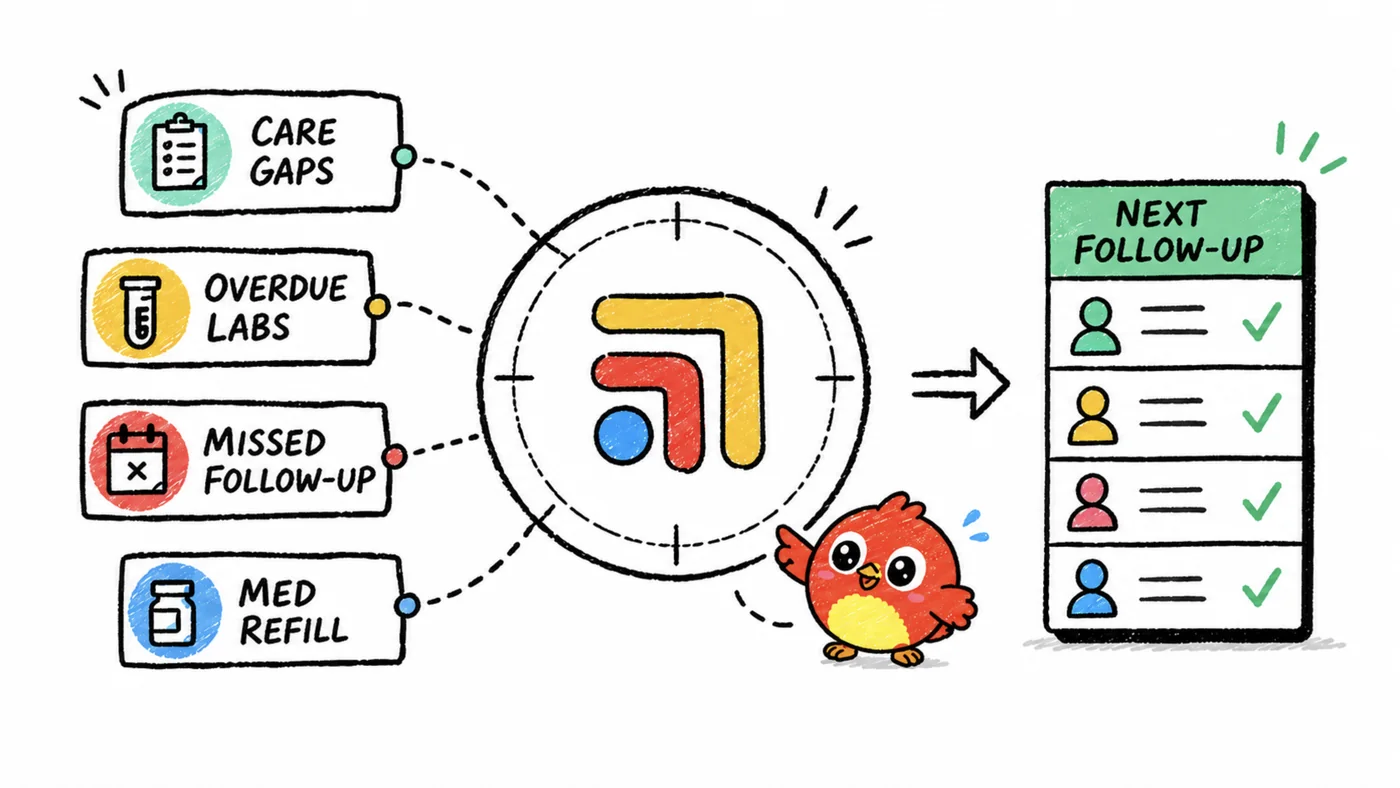
What you shouldn't skip is anything that touches revenue or patient follow-up. Failed-card alerts, lab results that land on a list with a date, and refill requests that can't get lost are worth paying for, because a missed one costs more than the add-on.
Setup when you're the only one doing it
Setting up an EMR alone mostly means building your visit templates, entering your prices or fee schedule, connecting your lab, registering for ePrescribing and testing the patient portal from a patient's side. No vendor publishes a setup time we could confirm, so ask each one on the demo how long a solo practice typically takes and what help is included.
Free starts help a lot here. Atlas.md's 30 free days before launch and Hint's "pay nothing until launch" let you build everything without paying for months you aren't seeing patients. If you're opening a new practice, the setup checklist for starting a medical practice walks through the order.
When solo stops being solo
Check now what happens when you add a second person, so the EMR you pick doesn't force a switch in year two. Elation adds a non-prescribing provider at $215 a month and includes office staff. OptiMantra charges $49 a month per additional practitioner and $25 per clinical staff member. Cerbo charges $63 a month per additional staff member, and Akute Premium covers two clinicians and 300 patients for $550 a month.
If you think you'll grow past one or two providers within a couple of years, compare your finalists against the best EMR for a small practice picks too.
The part most guides skip
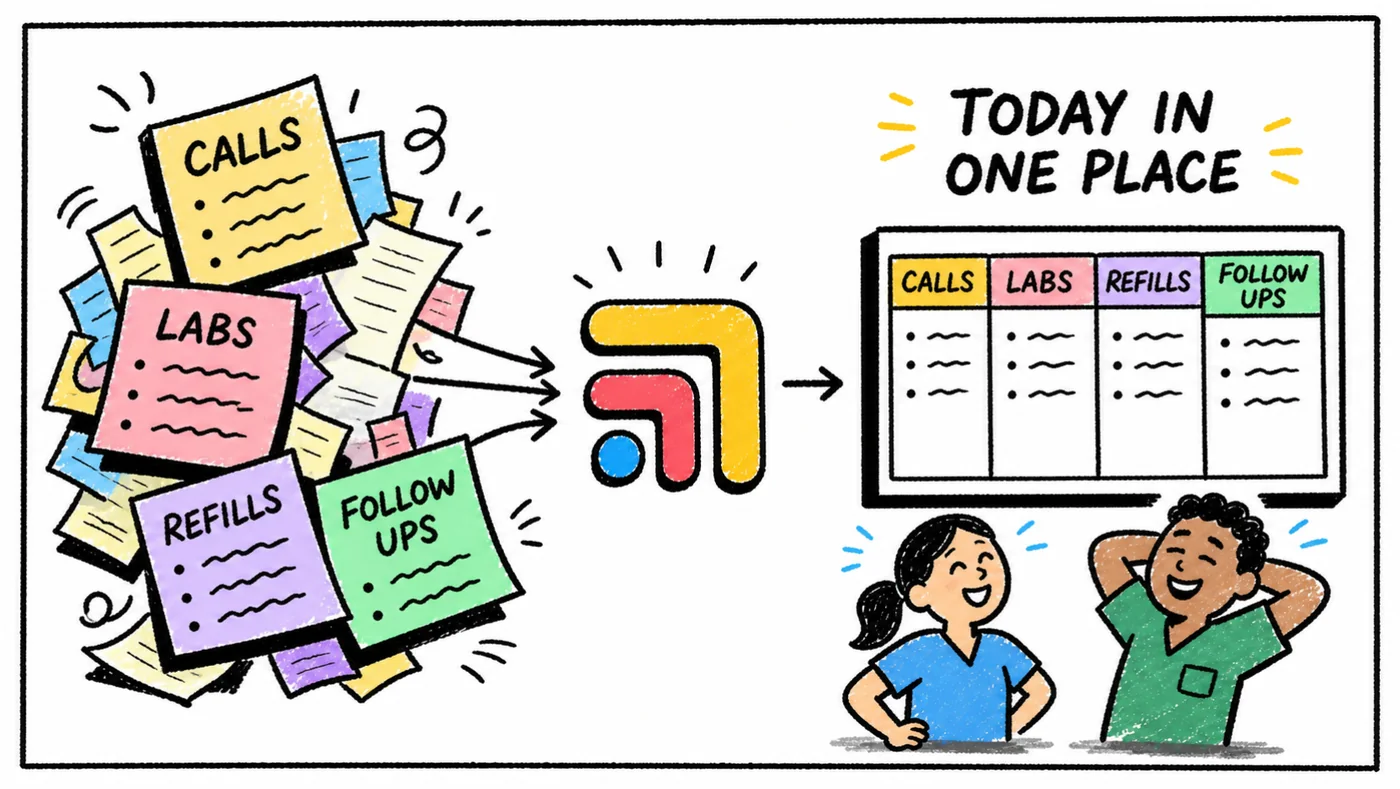
Every tool in a DPC clinic is good at its own job, and none of them were built to talk to each other. A patient text turns into a refill in the chart, which needs a review, which needs a reply, and the follow-up lives in someone's head. That isn't anyone's fault. The tools just don't share a to-do list.
That's the job Tabflows does. Tabflows is a dedicated tech team for DPC clinics. We connect the tools you already chose and give your team one place for chat, tasks and patient context, with managed workflows for the repeat work like refills, lab follow-ups and onboarding. You keep every tool you picked.
Frequently asked questions
What is the best EMR for a solo practice?
For a solo doctor on a budget, Charm (free for one provider) or OptiMantra ($99 a month) cover the basics. If you run memberships, Atlas.md ($300 a month with unlimited patients) or Hint ($290 a month on Launch) fit well, and Elation ($375 a month on its DPC plan) is the pick when the chart matters most.
How much does an EMR cost for one doctor?
In November 2026, published prices for one prescribing provider ran from $0 (Charm's free plan, capped at 50 encounters a month) to $375 to $425 a month for Elation, before ePrescribing, fax and card processing. Most solo doctors should budget for the subscription plus at least one or two paid add-ons.
Can a solo doctor set up an EMR without help?
Yes, most small-practice EMRs are set up by the owner. Atlas.md offers 30 days free before launch and Hint charges nothing until you launch, which gives you time to build templates and test the portal before your first patient.
Do I need practice management software if I'm a solo doctor?
Usually not as a separate product. Most EMRs aimed at small practices include scheduling, a portal and billing, so a solo doctor can run on one system plus a phone or texting tool.