
Software for Concierge and Membership Practices
A concierge or membership practice needs three things working together. An EMR for the clinical side, a billing tool that collects the membership or retainer on schedule without anyone chasing it, and a direct line between members and their doctor. Hint, Atlas.md and Elation all publish prices and handle memberships natively, SigmaMD is built specifically for concierge care with quote-based pricing, and practices that still bill insurance need claims tools on top of all of it.
This page is for any practice that charges patients a recurring fee for access, whether you call it concierge, membership, retainer or direct care. Prices are the published prices on each vendor's own site, checked in November 2026.
What a membership changes about your software
In a fee-for-service practice, the software's job is to turn each visit into a claim. In a membership practice, the visit is no longer the unit of revenue. The member is. That shifts what matters in your tools in a few specific ways.
Your billing system has to know who is a member, which plan they're on, when their next charge runs and whether their last one went through. Your scheduling has to make room for same-day and longer visits without a template built around fifteen-minute slots. Your messaging has to feel personal, because direct access to the doctor is usually the thing members are paying for. And all three need to agree with each other, so the front desk isn't checking a spreadsheet to see whether the person on line two is a current member.
Most EMRs were built for the first world, not the second. That's why membership practices often end up with a chart in one place, payments in another and messages in a third, and why the setup feels harder than it should. It isn't anything you're doing wrong. The tools simply weren't designed to share a member record.
The four jobs beyond the chart
Recurring billing that runs itself
The membership fee should charge automatically on the right day, retry when a card fails and tell someone when it keeps failing. Hint's published plans include member enrollment, recurring billing and payments on every tier, and they let you bill monthly, quarterly, semi-annually or annually, with an optional discount for paying ahead. Atlas.md lists subscription prorating and fixed-rate billing options. Elation's Membership Management feature creates and manages recurring membership plans inside the EMR, and it requires a Stripe account.
Plan tiers and contract terms
Concierge practices often sell more than one plan, such as an individual tier, a couple or family tier and an executive tier with extras. Look for software that lets you set the price, billing period and contract length per plan. Hint lets you set a contract length on each plan and choose whether it renews or ends automatically, and it warns you if someone cancels inside a minimum enrollment period you've defined. Those small controls save awkward conversations about annual agreements.
Member messaging with a real person behind it
Members expect to reach their doctor, often by text. A dedicated messaging tool helps when your EMR's portal feels clunky for that. Spruce publishes plans at $24 a month (Basic) and $49 a month (Communicator) per user, includes a BAA on every plan, and puts calls, texts, faxes and video in one shared inbox. If you already use Hint or Elation, Spruce lists integrations that pull Hint's membership and plan tags into conversations and sync texts and voicemails to the Elation chart.
High-touch scheduling
A concierge day has fewer, longer visits, with room for same-day requests and the occasional house call or annual executive physical. Ask every vendor to show you how they handle a 60 or 90 minute visit type, how members book (or request) time, and whether a non-member can be blocked from booking the member-only slots. None of the vendors on this page publish a scheduling-specific price, so test this on the demo with your real visit types.
On every demo, ask the vendor to walk through one member's whole month. A new member signs up on the 12th, their card fails on the 1st, they text you on the 3rd and they upgrade to the family plan on the 20th. Watch how many screens and tools that takes.
Options with published prices
Here's how the main options compare for a practice built on memberships. The prices are each vendor's published price for a single clinician unless noted.
| Product | Best for | Published price | Card fee on memberships |
|---|---|---|---|
| Hint (Launch) | Memberships first, with employer plans later | $290/mo, 1 clinician, unlimited members | 3.00% + $0.30 |
| Hint (Pro) | Growing practices, employer billing | $320/mo, 1 clinician, 100 members | 2.75% + $0.30 |
| Atlas.md | One price for chart, billing and dispensing | $300/mo per provider, unlimited patients | 2.1% + $0.30 |
| Elation (Standard DPC) | Charting first, memberships inside the EMR | $375/mo per provider | 2.99% (Stripe account required) |
| Akute (Essentials) | Automation inside the EMR | $300/mo, 1 clinician, 100 patients | Hint Core billing add-on, $50/mo |
| SigmaMD | Concierge-specific EMR | Quote-based | Ask on the demo |
| Hero EMR | Mixed cash, membership and insurance | Quote-based | Ask on the demo |
A few notes on reading this table. Hint's Launch plan includes unlimited members but costs more per card payment, while Pro has a lower card rate and adds $36 a month for each additional 50 members. Atlas.md has the lowest published card rate here, and also lists a $475 setup fee and a $400 annual renewal for each ePrescriber. Elation also lists a Standard Provider plan at $425 a month, so if you bill insurance too, ask on the demo which plan fits. For how these numbers add up across a full year, see what medical practice software costs.
If you want to keep your current EMR
Some concierge practices like their chart and only need the membership side. Hint sells its billing on its own, beside another EHR, starting with Core Growth at $110 a month for 100 members (plus $45 a month per 50 additional members). Its published card rate on that plan is 2.75% + $0.30 and ACH is 0.75% + $0.25, capped at $5. Hint and Elation also sync contact and demographic information between the two systems, and Hint tags each member's plan and status in Elation.
If you're opening a new practice
Two vendors publish ways to start before your first member pays. Hint says you pay nothing until you launch, and Atlas.md offers 30 days free before your practice opens. If you're planning from scratch, our software checklist for starting a practice covers the rest of the stack.
Concierge practices that still bill insurance
A lot of concierge practices are hybrids. They charge a membership fee for access, extended visits and amenities, and they still bill insurance (often Medicare) for the covered medical services. That works, but it puts extra demands on your software and on how your plans are written.
On the rules side, Medicare.gov's concierge care page says doctors who accept assignment can't charge extra for Medicare-covered services, so the membership fee can't include charges for things Medicare usually covers. It also notes that all Medicare doctors can charge for items and services Medicare doesn't cover, and that state laws may add more. How you define what the fee buys is a legal question, so have a healthcare attorney review your member agreement and tiers before you build them into your billing tool.
On the software side, a hybrid practice needs both machines running on the same patient.
- A claims workflow. Eligibility checks, coding, a clearinghouse and denial follow-up, which membership-first tools like Hint and Atlas.md aren't built around.
- A clean line between fee and claim. Your team should be able to see at a glance what the membership covers and what gets billed, so nothing is charged twice.
- One patient record. If the claims system and the membership tool don't share a record, someone ends up reconciling them by hand every month.
The vendors whose facts point toward hybrid practices are Elation (which calls itself an integrated EHR and billing platform built for primary care), Hero EMR (which says it runs insurance, cash, DPC or hybrid practices), Charm (with a free plan, recurring card charges and electronic claims through an Optum add-on) and OptiMantra (with membership management and insurance billing at $0.25 a claim). Practices with heavier insurance volume sometimes keep a full billing system like athenahealth and add Hint's billing-only plan for memberships. We cover the claims side in more depth in patient payments and billing software.
How to choose for your practice
Start with what your revenue actually looks like. If nearly all of it is membership fees, put the billing tool first and choose a chart that syncs with it, or a single system like Atlas.md or Hint that does both. If a meaningful share comes from insurance, start with a chart that handles claims well and make sure the membership side can live on the same patient record.
Then test the parts members feel. Send a test message as a patient and see where it lands. Book a long visit. Let a card fail on purpose and watch what happens next. Ask how plan changes, pauses and cancellations show up for your front desk.
Finally, count every fee. Card processing on a few hundred memberships can rival the software subscription itself, and ePrescribing, extra users and messaging tools add up. Our demo checklist has the questions to ask so the quote you sign matches the bill you get.
The part most guides skip
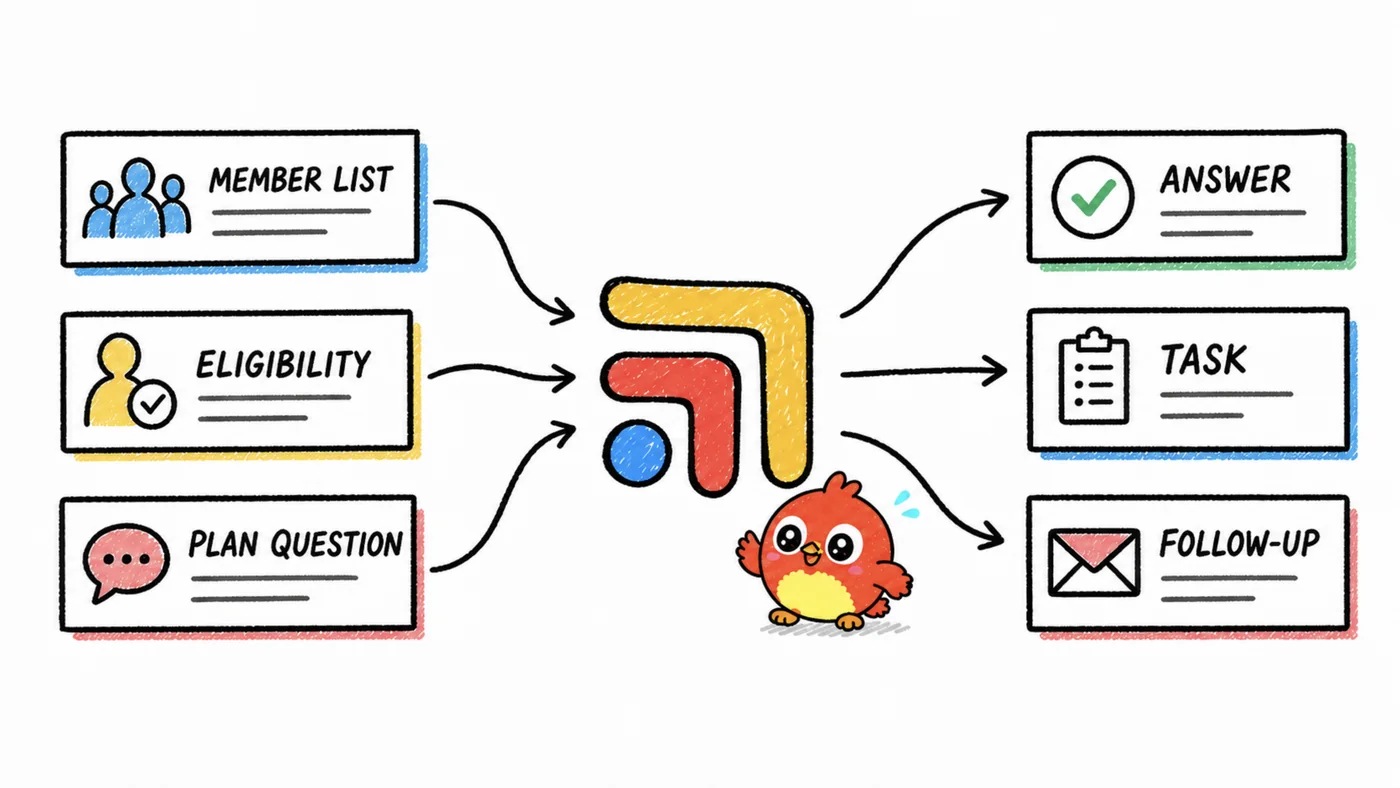
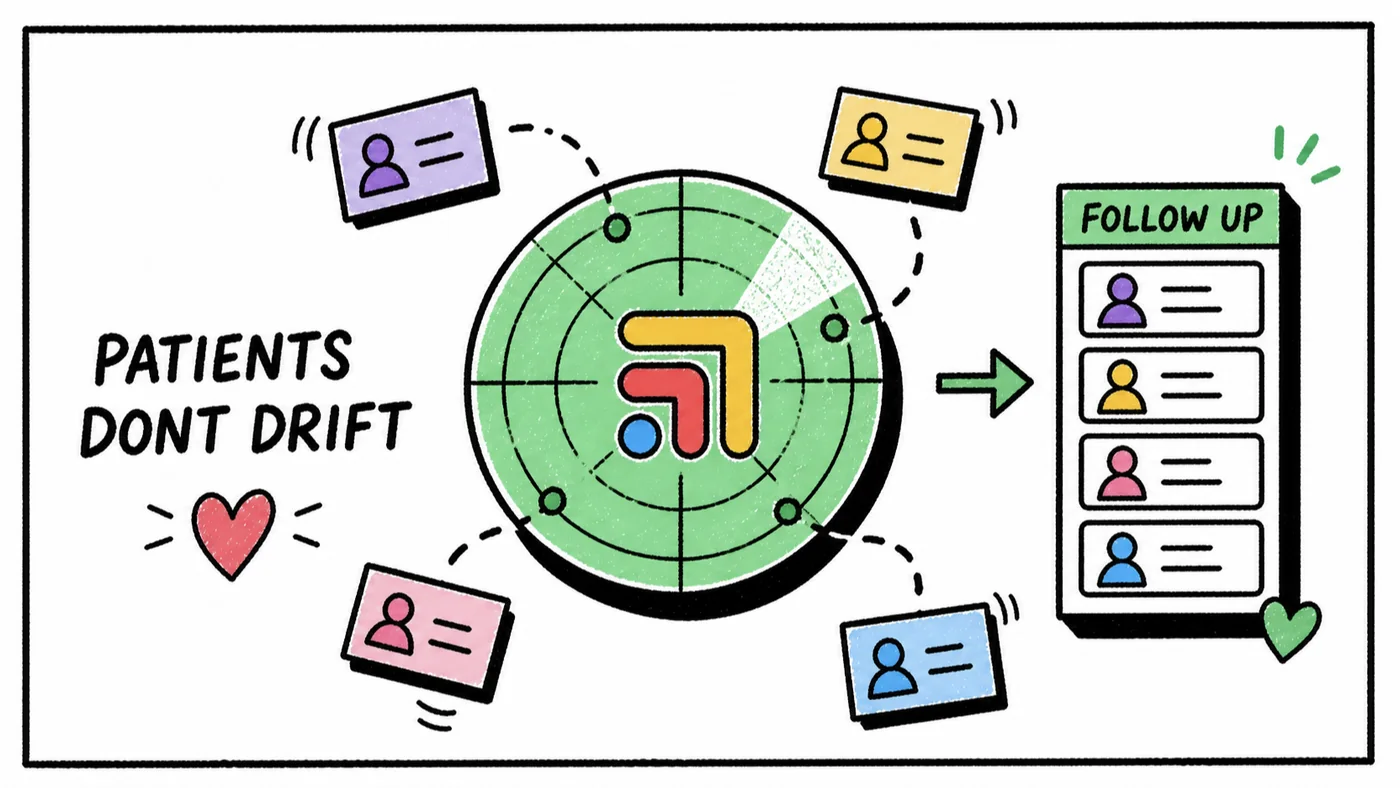
Every tool in a DPC clinic is good at its own job, and none of them were built to talk to each other. A patient text turns into a refill in the chart, which needs a review, which needs a reply, and the follow-up lives in someone's head. That isn't anyone's fault. The tools just don't share a to-do list.
That's the job Tabflows does. Tabflows is a dedicated tech team for DPC clinics. We connect the tools you already chose and give your team one place for chat, tasks and patient context, with managed workflows for the repeat work like refills, lab follow-ups and onboarding. You keep every tool you picked.
Frequently asked questions
What software does a concierge medicine practice need?
An EMR for the chart and prescribing, a membership billing tool that charges the retainer on a schedule and handles failed cards, and a messaging tool that lets members reach you directly. Some products cover two or all three of these; most practices still end up with at least two tools.
Is there an EMR built specifically for concierge medicine?
SigmaMD describes itself as an all-in-one EMR for concierge medicine, and its pricing is quote-based. Hint, Atlas.md and Elation are built around primary care memberships and publish their prices, so they're worth comparing alongside it.
Can a concierge practice still bill insurance or Medicare?
Many do, which is usually called a hybrid model. Medicare.gov says doctors who accept assignment can't charge extra for Medicare-covered services through the membership fee, so the fee has to pay for things Medicare doesn't cover. Have a healthcare attorney review how your tiers are written.
How much does concierge medicine software cost?
Published prices in November 2026 ran from about $290 a month (Hint Launch, one clinician, unlimited members) to $375 a month per provider (Elation's DPC plan), plus card processing. A concierge-specific EMR like SigmaMD is quote-based, so ask on the demo.