
The Best EMR for a Private Practice (cash-pay, membership or insurance)
The best EMR for a private practice depends first on how your patients pay you. If you bill insurance, demo athenahealth and eClinicalWorks first, because their claims and billing tools carry most of the weight. If patients pay you directly through memberships or cash visits, start with Elation, Hint or Atlas.md. If you run a hybrid of both, look at OptiMantra, Charm and Hero EMR, which are set up to bill claims and patients from the same system.
Owning your practice also means owning the consequences of the contract, so this guide covers the questions to ask about claims, membership billing and getting your data out if you ever leave. Prices quoted here are each vendor's published price, checked on their own site in November 2026.
Start with how your practice gets paid
Independent practices tend to fall into three payment models, and each one puts a different job at the center of the EMR.
| Payment model | The EMR's main billing job | Demo first |
|---|---|---|
| Insurance | Clean claims, denials, payment posting | athenahealth, eClinicalWorks |
| Cash-pay or membership | Recurring charges, failed cards | Elation, Hint, Atlas.md |
| Hybrid | Both, without double entry | OptiMantra, Charm, Hero EMR |
If you're not sure which you are, look at last quarter's deposits. Where most of the money came from is your model, even if you hope to shift it. You can always switch later, but buying for the practice you have today avoids paying for machinery you won't use.
If you bill insurance
For an insurance-based private practice, the chart matters, but the billing engine is where revenue is won or lost. A small practice can lose real money to claims that bounce back and sit in a queue nobody has time to work.
athenahealth is the fullest single system for this. athenaOne combines the EHR, medical billing and practice management, and patient engagement, and athenahealth offers billing support services aimed at more accurate claims and less admin work for small independent practices. Pricing is quote-based.
eClinicalWorks is a strong second demo, especially if you're leaving another EHR, since it says it will migrate your existing EHR data for free. We couldn't confirm a published price, so ask for one.
OptiMantra is the low-cost option for a smaller insurance volume. Insurance billing is $0.25 per claim on top of $99 a month for the first practitioner.
Questions to ask about claims and the clearinghouse
A clearinghouse is the middleman that checks your claims and passes them to each payer. Ask every vendor:
- Which clearinghouse do you use, and is it included or billed separately?
- Are electronic remittance (ERA) posting and eligibility checks included?
- How are denials flagged, and who sees them first?
- Is your billing service priced as a flat fee or a percentage of collections?
- If I leave, can I still work my open claims in the old system?
Charm, for example, offers electronic claims and a clearinghouse through a partnership with Optum as an add-on, so the add-on price belongs in your comparison.
If you're cash-pay or membership
When patients pay you directly, there are no claims to scrub. Instead the EMR has to charge the right card on the right day, retry when a card fails, and show you who's behind before it becomes an awkward conversation.
Elation fits a membership practice that wants a primary care chart first. The Standard DPC Provider plan is $375 a month, and its membership management runs through a Stripe account at 2.99% of collected card payments or 1% plus 25 cents per ACH payment (capped at $5).
Hint is the most membership-focused option, with flexible billing periods (monthly, quarterly, semi-annual or annual) and minimum enrollment periods. Launch is $290 a month with one clinician and unlimited members, and card processing on Launch is 3% plus 30 cents.
Atlas.md charges $300 a month per provider with unlimited patients, offers subscription proration and fixed-rate billing, and processes cards at 2.1% plus 30 cents.
For a concierge model, SigmaMD describes itself as an all-in-one EMR built for concierge medicine, and Ultralight says it supports tiered programs, annual packages and concierge retainers. Neither price was published in our facts, so ask on the demo. Our guide to concierge and membership practice software goes deeper.
Questions to ask about membership billing
- What happens, step by step, when a member's card fails?
- Can I prorate a mid-month signup and offer an annual discount?
- What is the card fee and the ACH fee, and who holds the merchant account?
- Can I bill a family on one card and an employer on one invoice?
Processing fees compound over a year, so compare them as carefully as the subscription. The patient payments and billing software guide lays them side by side.
A 1% difference in card fees on $20,000 a month of membership revenue is $200 a month, which can be more than the gap between two EMR subscriptions.
If you run a hybrid practice
Many private practices take some insurance and also sell memberships, cash visits or packages. The risk in a hybrid practice is double entry, where one system handles claims, another handles memberships, and someone has to reconcile them by hand at month's end.
OptiMantra lists insurance billing, superbills, and membership and package management on the same platform, with no contract and 30 days' notice to cancel. Charm pairs recurring card charges with its claims add-on. Hero EMR says it runs insurance, cash, DPC or hybrid practices on one plan with ambient dictation, texting and EPCS included, though its price isn't published, so ask for a quote.
There's also a rules question that software can't answer for you. Whether and how you can charge membership fees to insured patients, and especially to Medicare patients, depends on your payer contracts and on federal and state rules. Confirm your setup with a healthcare attorney before you build it into the billing system.
Your data is yours, so get the exit in writing
Owning a private practice means you might sell it, merge it or switch EMRs someday. The chart, the billing history and the patient list are some of the most valuable things the practice owns, so check before you sign how you'd get them out.
Some vendors make exports a paid feature. Hint's Data Exporter is a $500 a month add-on on Pro and Scale and isn't available on Launch. Elation's API access comes with its Developer Platform Core at $150 per provider per month, and Hint's API is a $100 a month add-on. On the other side of a switch, eClinicalWorks offers free data migration from your current EHR.
Ask every finalist:
- What does a full export include (notes, labs, documents, billing history)?
- What format does it come in, and can another EMR import it?
- Is there a fee for the export, or for leaving mid-contract?
- How long after cancelling can I still access my data?
Narrowing it down
Choose two EMRs from your payment model's row, and run the same visit through both on the demo, from booking to the bill. Ask for a written quote that includes every add-on, the processing fees and the export terms. Then compare what the practice will pay in year one and how much of your day each system gives back. The demo checklist and red flags guide has a fuller list, and if you work alone, the best EMR for a solo practice guide does the one-provider math.
The part most guides skip
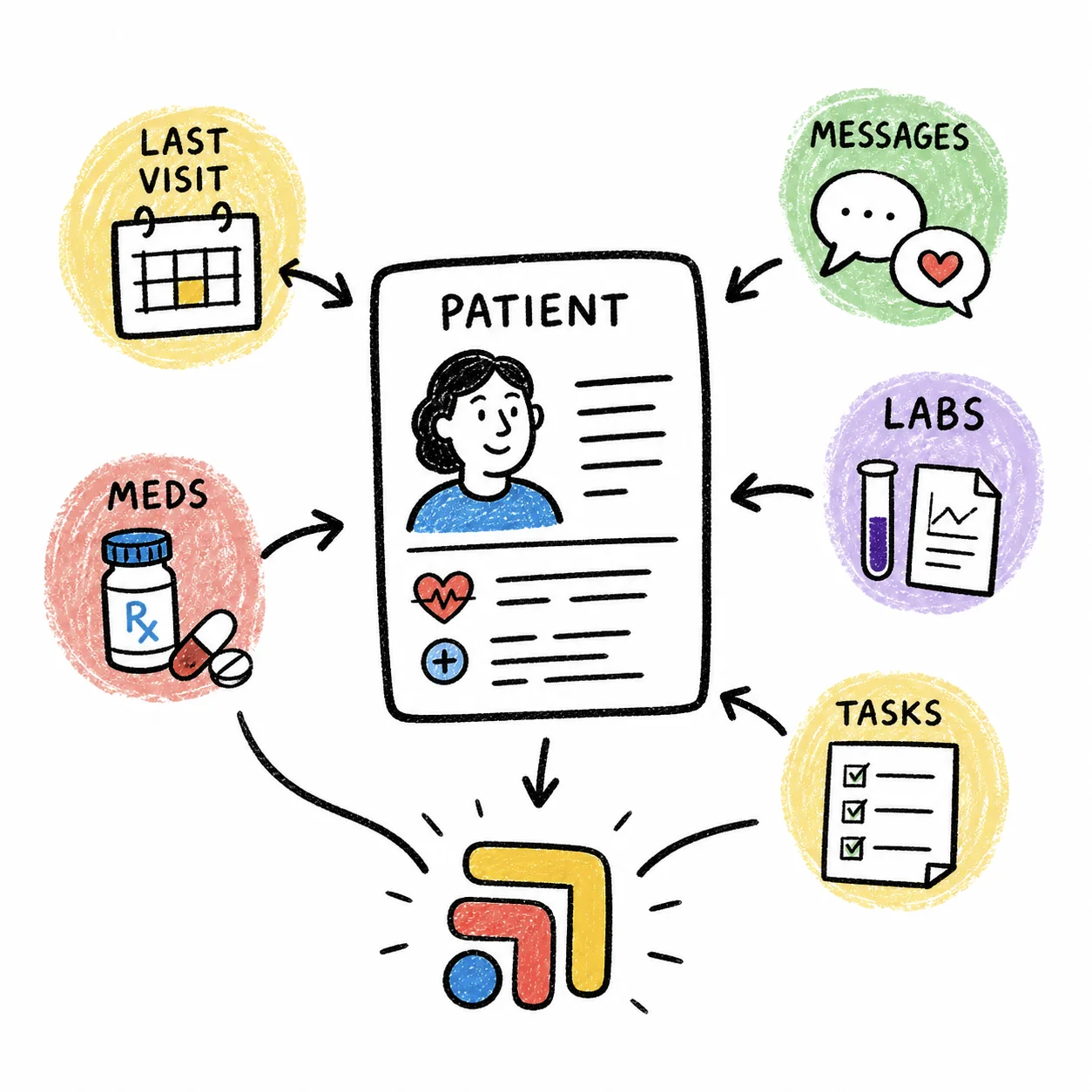
Every tool in a DPC clinic is good at its own job, and none of them were built to talk to each other. A patient text turns into a refill in the chart, which needs a review, which needs a reply, and the follow-up lives in someone's head. That isn't anyone's fault. The tools just don't share a to-do list.
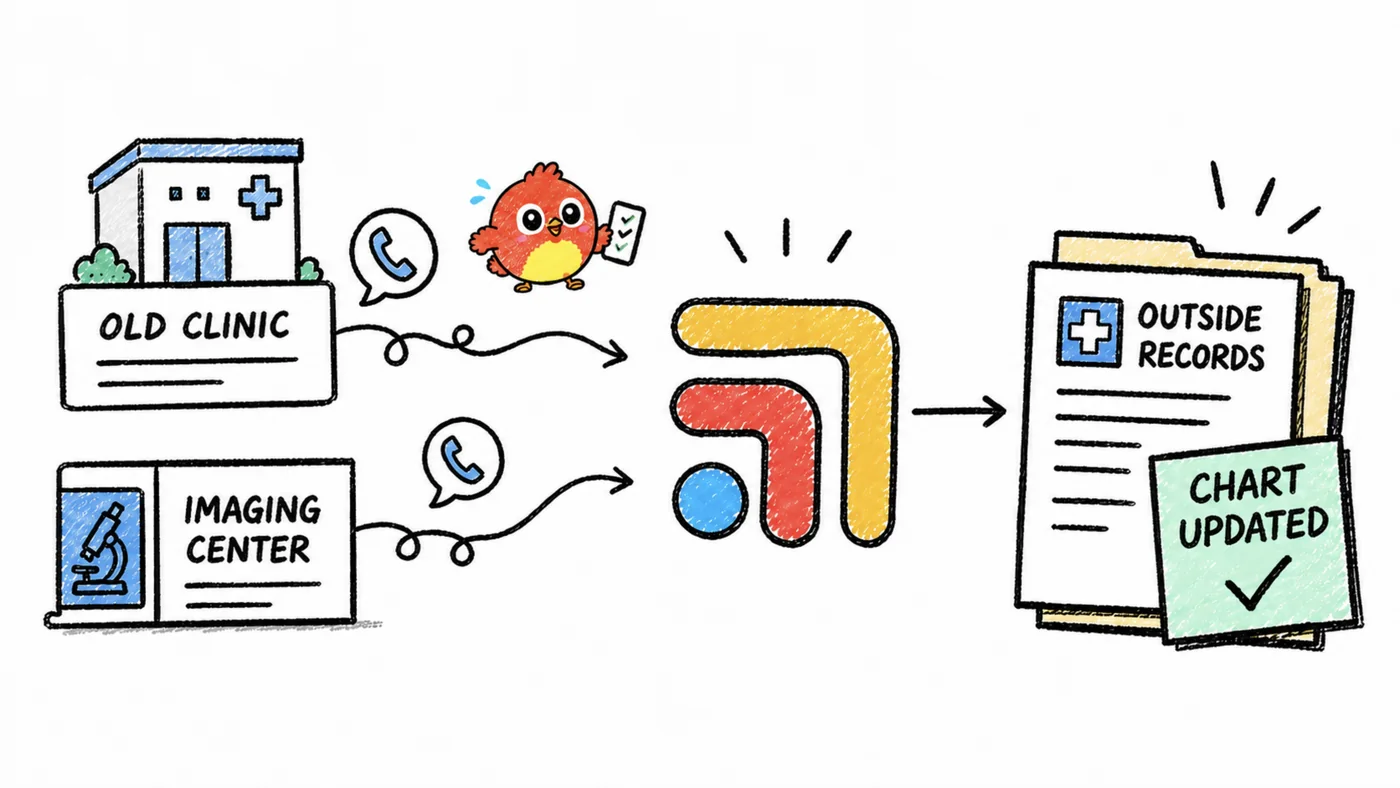
That's the job Tabflows does. Tabflows is a dedicated tech team for DPC clinics. We connect the tools you already chose and give your team one place for chat, tasks and patient context, with managed workflows for the repeat work like refills, lab follow-ups and onboarding. You keep every tool you picked.
Frequently asked questions
What is the best EMR for a private practice?
Pick by payment model. Insurance-billing practices should demo athenahealth and eClinicalWorks first, cash-pay and membership practices Elation, Hint or Atlas.md, and hybrid practices OptiMantra, Charm or Hero EMR, which bill both claims and patients.
Can one EMR handle both insurance claims and memberships?
Some can. OptiMantra lists insurance billing at $0.25 per claim alongside membership and package management, Charm offers recurring card charges plus a claims add-on through Optum, and Hero EMR says it runs insurance, cash, DPC and hybrid practices on one plan.
Who owns the patient data in my EMR?
Your contract decides how and when you can get it out, so read the data and termination sections before signing. Ask each vendor what a full export includes, what format it comes in, and what it costs, since some charge for it (Hint's Data Exporter is a $500 a month add-on on Pro and Scale).
What should I ask an EMR vendor about insurance billing?
Ask which clearinghouse it uses, whether claims and ERA posting are included or extra, how denials are flagged, and whether billing services are priced as a percentage of collections. Get the answers in the written quote.